
Das Selbstbestimmungsgesetz tritt in Kraft

Am 1. November 2024 tritt das SBBG in Kraft. Anna Katharina Mangold ist Professorin, Juristin und Projektleiterin im SFB „Sexdiversity“ und leitet dort das Projekt S05 „Normative Implikationen der Menschenrechte von Menschen mit DSD in einer nicht-binären Rechtswelt“. Für Feministische Studienhat sie die rechtswissenschaftliche Perspektive des neuen Selbstbestimmungsgesetzes beleuchtet.

Link zum Beitrag: https://blog.feministische-studien.de/2024/11/das-selbstbestimmungsgesetz-tritt-in-kraft/

Bildrechte: Lucas Werkmeister, CC BY 4.0 via Wikimedia Commons

Teilen:

Schreibe einen Kommentar

Deine E-Mail-Adresse wird nicht veröffentlicht. Erforderliche Felder sind mit * markiert

Mehr Posts

At a Glance: Sex Differences in Health and Disease – Highlights from the EMBO/EMBL Symposium 2026

What do fly-intestines, artificial blood vessels, and X-chromosome inactivation have in common? That’s right, sex differences!
These and many other topics were discussed at the 2026 EMBO/EMBL (European Molecular Biology Organization/ European Molecular Biology Laboratory) Symposium “Sex Differences in Health and Disease” in Heidelberg, Germany. CRC 1665 researchers Nadine Hornig, Prathiksha Ramesh, and I, Katharina Dörner, attended four days full of talks, discussions, and fun group activities at the EMBL Advanced Training Centre.

By Nadav Spiegelman

Epistemische Ungerechtigkeit in der Gesundheitsversorgung von trans* und nichtbinären Personen: Eine Analyse von Vorstellungen von Detransition im medizinischen und gesellschaftlichen Diskurs

In diesem Blogbeitrag möchten wir auf ein weiteres Problem aufmerksam machen: epistemische Ungerechtigkeit gegenüber trans* und nichtbinären Personen. Der Begriff bezeichnet Formen von Ungerechtigkeit, die Menschen in ihrer Eigenschaft als Wissende betreffen. Sie entstehen, wenn Personen aufgrund struktureller Machtverhältnisse darin benachteiligt werden, ihre Erfahrungen zu verstehen, zu beschreiben und anderen mitzuteilen (Fricker, 2007). Wir diskutieren diese Problematik am Beispiel der Detransition.

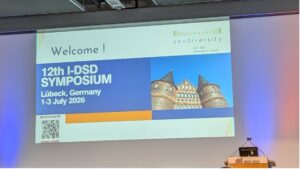
Connecting science across continents: Highlights of the 12th I-DSD congress

For three days Lübeck became the meeting pot for experts discussing the developments, challenges and aims in research of differences of sex development (DSD). With a variety of participants from five continents, the symposium positioned itself at the interface of research, medicine and psychosocial crosstalk. It brought a new focus to the current scientific perspective, with implications from the latest political decisions in sex testing in elite sports.

Why does Parkinson’s Disease affect men more often?  DLS Recap on Sex Differences in Astrocytes and Oligodendrocytes

The first day featured a lecture by Julia M. Schulze-Hentrich, Professor of Genetics and Epigenetics at Saarland University. Alongside our CRC1665 group, colleagues from neurogenetics also joined the presentation, adding welcome expertise to the room. The paper “Sex and Gender Differences in the Molecular Etiology of Parkinson’s Disease”, which she co-authored, had been shared with the doctoral students beforehand, and to make it accessible across disciplines we also prepared a glossary of key terms.

Nach oben scrollen