New Video Available: Julia Schulze-Hentrich on Sex Differences in Parkinson’s Disease

The recording of the latest Distinguished Lecturer Series (DLS) talk of the CRC 1665 “Sexdiversity” at the University of Lübeck is now available.

On May 7, 2026, Julia Schulze-Hentrich presented her lecture:

“Sex Differences in Astrocytes and Oligodendrocytes in the Context of Parkinson’s Disease”
 

Parkinson’s disease affects men more frequently than women, yet the biological mechanisms underlying these sex differences remain incompletely understood. In her talk, Julia Schulze-Hentrich explored how genetic, environmental, and epigenetic factors may contribute to disease development and progression in a sex-specific manner.

Drawing on research conducted in collaboration with the DIGPD study group, she presented findings showing stronger associations between blood DNA methylation and Parkinson’s disease in females than in males. She also discussed her work on sex-specific changes in astrocytes and oligodendrocytes using transgenic animal models across different stages of the disease, providing valuable insights into the cellular and molecular mechanisms that may underlie sex-related differences in neurodegeneration.

About the Speaker

Julia Schulze-Hentrich has been Professor of Genetics and Epigenetics at Saarland University since 2023. Her research focuses on gene regulation and epigenetic mechanisms in neurodegenerative diseases. For her contributions to the field, she has received several academic distinctions, including the Maria Gräfin von Linden Prize.

We invite you to watch the recording and learn more about current research on sex differences in Parkinson’s disease and their implications for understanding neurodegenerative disorders.

Watch the video here: https://www.youtube.com/watch?v=ffd3WQbnKiI

Teilen:

Mehr Posts

Why does Parkinson’s Disease affect men more often?  DLS Recap on Sex Differences in Astrocytes and Oligodendrocytes

The first day featured a lecture by Julia M. Schulze-Hentrich, Professor of Genetics and Epigenetics at Saarland University. Alongside our CRC1665 group, colleagues from neurogenetics also joined the presentation, adding welcome expertise to the room. The paper “Sex and Gender Differences in the Molecular Etiology of Parkinson’s Disease”, which she co-authored, had been shared with the doctoral students beforehand, and to make it accessible across disciplines we also prepared a glossary of key terms.

IOC und Geschlechtstests im Sport: Fairness oder Ausgrenzung?

Im März 2026 hat das internationale olympische Komitee (IOC) neue Richtlinien für die Frauenkategorie im olympischen Sport verabschiedet. Grundlage dafür war eine umfassende Policy zum Schutz der Frauenkategorie im Sport im März 2026, in die wissenschaftliche, medizinische, rechtliche und ethische Erkenntnisse sowie Rückmeldungen von Athlet*innen eingeflossen sind.

Von Zellen, Mäusen und Menschen

Was können wir in der Hormonforschung aus Modellsystemen lernen? Und welchen Zusammenhang gibt es zwischen Geschlecht, Körpertemperatur und Herzschlag?
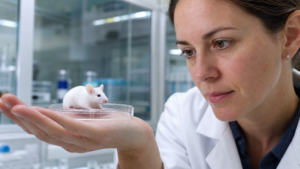
Dieser Blogbeitrag eröffnet einen Blick hinter die Kulissen der endokrinologischen Forschung. Er geht der Frage nach, wie Wissenschaftler*innen die chemischen Botenstoffe des menschlichen Körpers untersuchen können. Wie werden dabei Tier- und Zellmodelle eingesetzt? Und warum sind die von uns verwendeten Werkzeuge entscheidend?

Nach oben scrollen