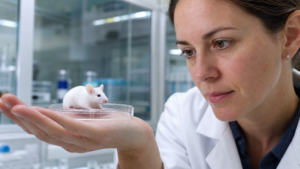
To foster scientific collaboration, members of the Collaborative Research Centre 1665 gathered on 5–6 February 2026 for their third annual retreat at the Fielmann Akademie in Plön. Situated directly on the lakeshore and offering a stunning winter panorama across the water, the venue provided a focused yet open atmosphere for exchange, reflection, and the development of a shared vision. The retreat was conceived as a milestone moment in the Centre’s ongoing work. It provided a space to reflect on research results, assess challenges, and prepare the agenda for the planned second funding phase. In collaborative working groups, specific themes and challenges were addressed. Plenary discussions among all members, as well as reports by speakers and the Scientific Advisory Council, were part of the schedule. The highlight was the first CRC 1665 poster prize, which was awarded on Day 2. The retreat vividly demonstrated what can be achieved when medicine, molecular biology, psychology, social sciences, law, and the humanities come together with a shared purpose within a large interdisciplinary research consortium.
Posters as a Platform for Communication
From the very beginning, the focus was clear: understanding where we stand and where we are heading. The central aim of the retreat was as to acknowledge the crucial role that doctoral and medical researchers play in the day-to-day research process.
All PhD students and MD candidates presented their current progress in a scientific poster format, each delivering a concise five-minute pitch. The ballroom quickly transformed into a dynamic arena of scientific exchange. Molecular mechanisms, clinical cohorts, psychological paradigms, qualitative interviews, legal analyses, and data-driven approaches stood side by side, illustrating the full scope of various methods and thematic interdisciplinarity.
The poster format encouraged:
- Direct methodological feedback
- Cross-disciplinary questioning
- The formation of new conceptual links between projects
- Critical yet supportive discussion
Many conversations extended well beyond the scheduled time slots, highlighting the value of active dialogue over passive listening. For several doctoral researchers, the retreat became an important milestone: a moment to articulate progress, receive encouragement, and refine future directions. Janu Milella, a PhD candidate, reflected “the poster presentations were a great format, interactive, with intensive discussions and real feedback instead of sitting and listening all day.” Another researcher added with a smile “the location and catering were top“.


Welcoming New Members and Emerging Projects
The retreat also marked a moment of transition and growth. New members were formally welcomed, bringing fresh perspectives and broadening the research portfolio. We are pleased to introduce the following researchers:
- Alisa Weltken (PhD candidate) – “Generation of Isogenic Cell Lines using CRISPR/Cas9 to Investigate the Influence of Steroid Hormones on GnRH Neurons.”
- Katharina Dörner (MD candidate) – “Identification of Hormone-Responsive Genes in Female Post-Natal Genital Tissue as a Model to Understand Hormone-Dependent Processes in Female Genital Differentiation.”
Both were immediately integrated into discussions with relevant working groups, fostering early connections and identifying potential avenues for collaboration.
Celebrating Scientific Communication: Poster Awards 2026
To acknowledge outstanding scientific communication, a Poster Prize was introduced as a new element of the retreat. The awards honored scientific rigor, clarity, accessibility, and the ability to engage in discussions across disciplines. The posters were evaluated based on their visual quality, the clarity of their presentation, the strength of their conclusions and the depth of understanding demonstrated by the presenters.
We are proud to celebrate the following recipients:
1st Prize
Konstantin Döhr – “ESTEEM: The Effects of Stress and Testosterone on Emotional Biases and Empathy”
2nd Prize
Agas Chandra Prakash – “A Multiplexed Framework for Mapping DSD Regulatory Architecture at Single-Base Resolution”
3rd Prize
Kaj Kähne – “TIN Perspectives at the Intersection of Gender Norms and Psychological Theory: A Qualitative Empirical Dissertation Project”
Audience Award
Svenja Denker – “Exploring Gonadal Development Using Spatial Transcriptomics”
The awards celebrated outstanding scientific achievement and skillful cross-disciplinary communication.


Building a Shared Language
A recurring theme throughout the retreat was the challenge – and opportunity – of building a shared language. Interdisciplinary research requires more than thematic overlap; it demands conceptual clarity and mutual understanding to navigate both conceptual and methodological differences.
The working groups addressed the following challenges:
- Harmonizing terminology across disciplines
- Developing effective Science communication strategies
- Integrating and managing Data infrastructure and integration
- Considering societal implications and promoting responsible research practices
Questions of representation, public discourse, and the avoidance of gender bias in research design were openly debated, reflecting the retreat’s emphasis on dialogue and cross-disciplinary exchange. These discussions underscored CRC 1665’s role in shaping responsible, reflective, and socially attuned scientific practices.
Beyond the Scientific Program
Equally important were the informal moments. Shared dinners, lakeside conversations, and relaxed evening gatherings created space for connection beyond disciplinary roles. By the second day, the atmosphere felt noticeably more confident and open. Ideas flowed freely, collaborations began to take shape, and new perspectives emerged.
The retreat reaffirmed that scientific excellence thrives where dialogue is encouraged and a sense of community is nurtured.

Looking Ahead
The 3rd CRC 1665 Retreat in Plön made one thing clear: interdisciplinary excellence does not happen automatically. It must be cultivated through structured dialogue, mutual respect, critical feedback, and a shared sense of ambition.


With renewed clarity, strengthened networks and a growing community that now includes new members and evolving projects, CRC 1665 leaves Plön prepared for its next chapter – scientifically ambitious, collaboratively grounded and ready to shape the future of sexdiversity research together.
Kind regards from the retreat organizing team,
Lea Egli, Agas Chandra Prakash & Henriette Mühlmann
Copyright: SFB1665, Photos: Guido Kollmeier