Vortrag – Prof. Melissa Hines – Early androgen exposure and human gender development

Update (8.11.2024):

The public lecture from 17th October by Melissa Hines on „Early androgen exposure and human gender development“ is now available on YouTube.

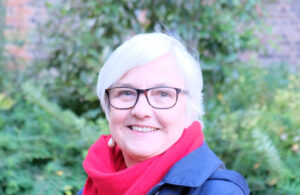
Melissa Hines (University of Cambridge) hielt am 17. Oktober 2024 den ersten öffentlichen Vortrag der neuen Distinguished Lecture Series (DLS) im Hörsaal des Instituts für Medizingeschichte und Wissenschaftsforschung (IMGWF) an der Universität Lübeck. Die neue Veranstaltungsreihe des Sonderforschungsbereichs „Sexdiversity“ wird im Laufe des Wintersemesters mit weiteren hochkarätigen Abendvorträgen fortgesetzt. Die inhaltliche Organisation übernahm das integrierte Graduiertenkolleg (iRTG). Die Vorträge werden zudem aufgezeichnet und auf dem Youtube-Kanal der Universität Lübeck veröffentlicht. Die nächste DLS mit einem Vortrag von Staffan Müller-Wille (University of Cambridge) findet am 12. Dezember 2024 von 16 bis 18 Uhr statt. 

Abstract

Androgenic hormones influence neurobehavioral development during sensitive periods of prenatal or neonatal life. Thousands of experimental studies of non-human mammals document these influences. Studies of people with genetic syndromes that cause unusual early androgen exposure suggest similar influences on human development. For instance, girls and women exposed to high concentrations of androgens prenatally because they have congenital adrenal hyperplasia (CAH) show increased male-typical childhood play behavior, reduced
identification with female gender assignment and reduced heterosexual interest. Similarly, the behavior of XY females who experience no effective androgen exposure because of complete androgen insensitivity syndrome (CAIS) generally show female-typical behavior. Normal variability in androgen exposure during infancy also relates to later childhood play with higher androgen exposure predicting increased male-typical behavior.
Other behaviours that differ on average for males and females, such as early vocabulary and spatial abilities, may also be influenced by androgen exposure during infancy. Social and cognitive processes also influence gender development and in turn may be influenced by androgen exposure earlier in development. In addition, some sex/gender related behaviors appear to develop independent of early androgen exposure. Future research might usefully investigate not only the range of outcomes influenced or uninfluenced by early androgen exposure, but also how social and cognitive factors work with early androgen exposure, particularly during infancy, to shape sex/gender-related outcomes.

Bio

Melissa Hines is Professor of Psychology and Director of the Gender Development
Research Centre at the University of Cambridge. She also is a Fellow at Churchill College, Cambridge. She is a past president of the International Academy of Sex Research, and the author of the book, Brain Gender (Oxford University Press). Her research focuses on factors influencing the development of gender-related behaviours, including sexual orientation, gender identity, aggression, characteristics related to autism, and children’s play behavior. In particular, she studies how gonadal steroids, such as testosterone, prenatally and during infancy, shape human brain development and behaviour, and in how these early hormonal influences interact with postnatal socialization to shape gendered outcomes. Melissa was educated at Princeton University (BA) and at the University of California, Los Angeles (UCLA) (PhD). Funders of her research include the
United States Public Health Service, the United Kingdom Economic and Social Research Council, and the Wellcome Trust.

Teilen:

Schreibe einen Kommentar

Deine E-Mail-Adresse wird nicht veröffentlicht. Erforderliche Felder sind mit * markiert

Mehr Posts

Five Days of Science, AI and Questioning Everything: iRTG Summer School 2026

From 28 September to 2 October 2026, doctoral researchers and MD students from Collaborative Research Centre 1665 “Sexdiversity” gathered for the annual iRTG Summer School, themed “Scientific Writing Across Disciplines – AI and Good Scientific Practice.”

Beyond writing workshops and conversations about technology, the week gave us a chance to step away from everyday research routines, exchange ideas across disciplines and spend time together outside the lab or office.


Michel Foucault zur Geschichte von Intersex. Was folgt auf die Medikalisierung?

Das nun auch auf Deutsch vorgelegte Buch aus dem Nachlass von Michel Foucault Die Hermaphroditen ist ein Forschungsbericht. Im Zusammenhang mit seinen Studien zur Geschichte der Sexualität ist Foucault auf mehrere Fälle von Menschen mit uneindeutigem Geschlecht gestoßen. Diese Fälle interessierten ihn besonders, weil sich an ihnen zeigte, wie Gesellschaften nicht nur das sexuelle Verhalten, sondern auch die Geschlechtsidentität kontrollierten und einem Regime unterwarfen.

„The biggest barrier is finding someone that respects me“: Zur Diskriminierung von nicht-binären Personen durch die psychologische Gesundheitsversorgung

Für ihre Bachelorarbeit im Studiengang Psychologie an der Universität zu Lübeck hat Carlotta Behre einen systematischen Review zur Diskriminierung von nicht-binären Personen in der psychologischen Gesundheitsversorgung verfasst. Ende Juli 2026 hat sie die Abschlussarbeit unter dem Titel „Diskriminierung von nicht-binären Personen in der psychologischen Gesundheitsversorgung – Ein systematischer Review“ eingereicht. Dieser Beitrag gibt einen Überblick über ihre zentralen Fragestellungen und Ergebnisse.

At a Glance: Sex Differences in Health and Disease – Highlights from the EMBO/EMBL Symposium 2026

What do fly-intestines, artificial blood vessels, and X-chromosome inactivation have in common? That’s right, sex differences!
These and many other topics were discussed at the 2026 EMBO/EMBL (European Molecular Biology Organization/ European Molecular Biology Laboratory) Symposium “Sex Differences in Health and Disease” in Heidelberg, Germany. CRC 1665 researchers Nadine Hornig, Prathiksha Ramesh, and I, Katharina Dörner, attended four days full of talks, discussions, and fun group activities at the EMBL Advanced Training Centre.

Nach oben scrollen