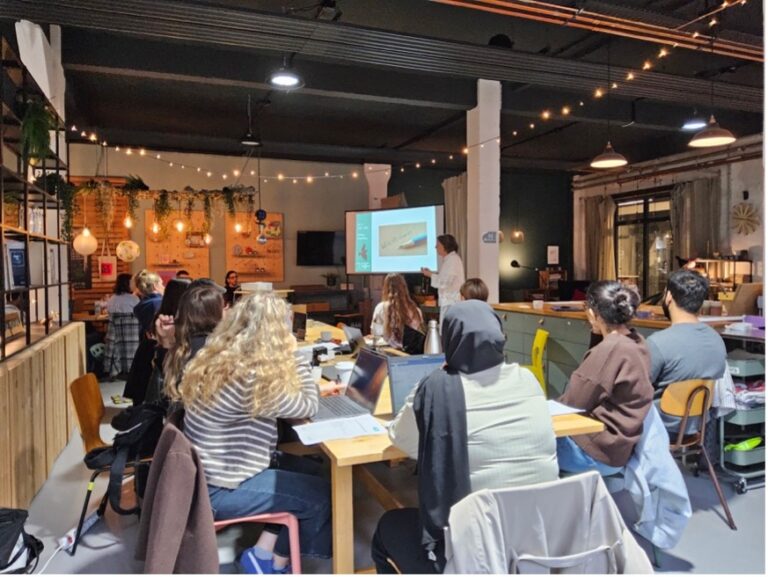
Image: Dr. Kimberly Crow leading the writing workshop at MachBar. Copyright: Henriette Mühlmann.
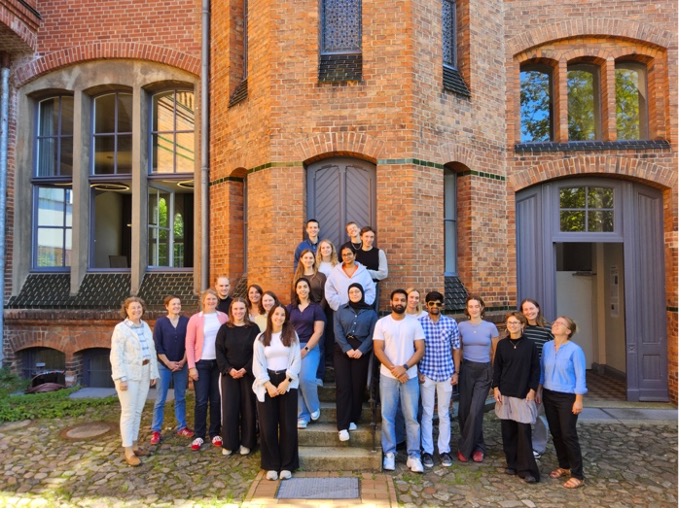
A Summer School at the end of September? Technically, summer was already over. Fortunately, Lübeck treated us to enough sunshine during the week to make the name feel appropriate. From 28 September to 2 October 2026, doctoral researchers and MD students from Collaborative Research Centre 1665 “Sexdiversity” gathered for the annual iRTG Summer School, themed “Scientific Writing Across Disciplines – AI and Good Scientific Practice.”
Beyond writing workshops and conversations about technology, the week gave us a chance to step away from everyday research routines, exchange ideas across disciplines and spend time together outside the lab or office. There was also pizza, plenty of conversation and a pub quiz for those who still had some brainpower left.
The Question of this Summer School
Our organizers, Alisa Weltken, Greta Ginski and Henriette Mühlmann, chose a topic that felt particularly relevant this year. Scientific writing is part of every researcher’s life, yet experience does not automatically make it easy. Whether we are drafting a first paper, working on a thesis chapter or explaining our findings to someone outside our field, finding the right words can be a challenge. Add artificial intelligence to the mix, and the questions multiply.
Dear ChatGPT, am I still a good scientist?
The Summer School began with an interactive session led by Deniz Sarikaya from the Ethical Innovation Hub at the University of Lübeck. One of the most relatable parts of the workshop was an invitation to reflect on our own attitudes toward artificial intelligence. Are we excited about what AI can do? Do we trust it enough to use it in important parts of our research? Are we worried about becoming too dependent on it? Or do we sometimes feel pressured to use AI simply because everyone else seems to be using it?
An especially interesting concept introduced during the workshop was de-skilling: the possibility that skills we have already developed might weaken if we stop practising them. Closely related was no-skilling, where we rely on AI so early that certain skills never fully develop in the first place. Perhaps the most important takeaway was simple: AI can assist scientific thinking, but it cannot take responsibility for it.
The Struggle is real: Scientific Writing Edition
After questioning our relationship with AI, it was time to face another familiar challenge: turning experiments, analyses and notes into a coherent manuscript. For Kimberly Crow’s hands-on writing workshop, we headed to the maker space MachBar, a welcome change of scenery. Its relaxed atmosphere and quiet setting made it an especially pleasant place to focus on our own texts.
With individual guidance and interdisciplinary peer feedback, we worked on our manuscripts and thesis chapters and practised explaining our ideas clearly. A sentence that makes perfect sense to a molecular biologist may raise questions for a social scientist, and vice versa. Sometimes the most useful feedback is simply: “But what does that actually mean?”
PublicationGod to rescue: Because even manuscripts need a guardian angel
Wednesday brought a different perspective on AI-assisted scientific writing, with a rather intriguing name: PublicationGod.
In a hands-on workshop led by Jens Mittag, participants were introduced to PublicationGod, an AI-powered tool he developed to support researchers in transforming experimental results into scientific manuscripts. But unlike many commonly used AI platforms, PublicationGod was developed with particular attention to research data protection, privacy, and compliance with European Union data-protection regulations. After all, as researchers, we are often excited about what AI can do with our data, but perhaps we should be equally curious about what happens to our data once we upload it.
For anyone who has spent hours staring at a blank document, wondering how to turn a collection of figures, tables, and experimental results into a coherent scientific story, the idea of AI-assisted manuscript preparation sounds almost too good to be true.
Different disciplines, shared questions
One of the most interesting aspects of the Summer School was the opportunity to step outside our own scientific bubbles and explore how researchers from different disciplines approach similar challenges. Thursday’s discussions shifted the focus toward artificial intelligence in the social sciences, with Marco Galle introducing AI-assisted text analysis and its applications in qualitative research.
In qualitative research, working with interviews, documents, and human experiences involves much more than simply identifying patterns. Interpretation, context, and understanding play a central role. But what happens when AI enters this process? Can a language model genuinely interpret the nuances of human experiences, or does it simply recognize patterns in words? The session encouraged us to think about the possibilities and limitations of AI-assisted analysis and the importance of maintaining human judgment throughout the research process. Interestingly, despite our different methodologies, many of the underlying concerns were remarkably similar. Whether we are analyzing gene expression data or interpreting interviews, we all face the challenge of ensuring that our findings are meaningful, transparent, and scientifically sound.
Science is better with pizza
Of course, the Summer School was not all about manuscripts, methodologies, and the future of artificial intelligence. After a full day of scientific discussions, sometimes the most productive thing to do is close the laptop and talk about something completely unrelated to research.
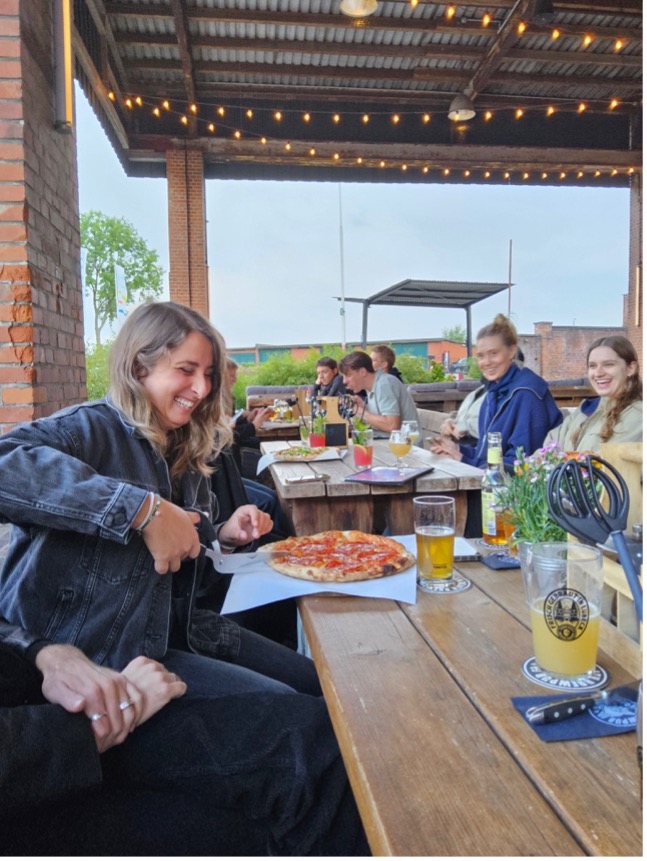
The evening program offered plenty of opportunities for exactly that. We started with a sunny get-together by the water and met again on Tuesday for pizza at Sudden Death, a brewery setting where sitting outdoors over food and unhurried conversations felt like a welcome break. Those conversations are easy to miss in the rush of everyday research.
After the packed schedule, quite a few of us-including me-skipped Wednesday’s pub quiz. From what we heard, the questions at Finnegan’s were challenging enough to demand some serious team brainstorming. Apparently, being an expert in your PhD topic does not make general knowledge any easier!