All members of the Collaborative Research Centre „Sexdiversity “ (CRC 1665) gathered for the 2nd Retreat at the grand and breathtakingly beautiful Plön Castle. This two-day event, held on February 20-21, 2025, provided an excellent opportunity for collaboration, knowledge exchange, and productive discussions in a truly inspiring setting. As a member of the retreat organizing team, Svenja Denker, a doctoral candidate in the CRC, reflects on the event from her perspective.
A Look at the Retreat Schedule
The retreat featured a schedule designed to promote collaboration and progress within CRC 1665. On Thursday morning, attendees registered for the event and received goodies bearing the CRC logo. The main program for the day included progress reports from all M- and S-Projects and associated doctoral projects. In brief eight-minute presentations, mostly doctoral candidates shared the achievements of their projects since the launch of the CRC. During the talk, everyone was tasked with summarizing last year’s work within a limited time frame. They were required to cover specific topics while ensuring that a broad audience from diverse disciplines could easily understand the content. Each report provided a comprehensive overview of the project team, collaborations, summarized objectives, current work, the focus of the PhD thesis, first-year experiences, and future perspectives. Overall, the short presentations were successful, with most participants adhering to the specified slides and time limits, which allowed everyone to gain insight into the CRC projects. Some questions were addressed immediately, while others were discussed in smaller groups during breaks, promoting additional networking within the CRC.
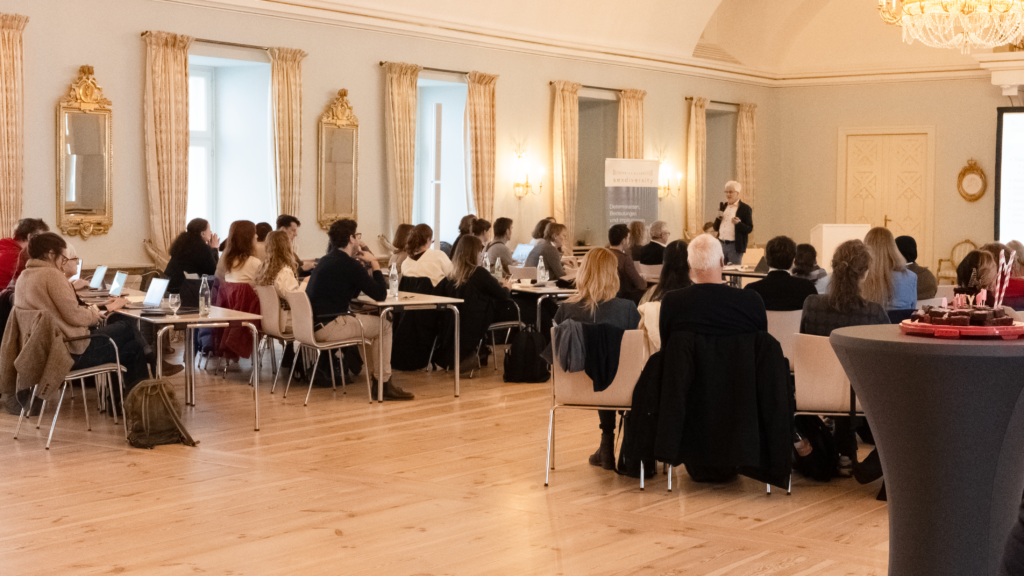
On this first day, each doctoral candidate was also given the opportunity for a 30-minute slot for a Thesis Advisory Committee (TAC) meeting with their supervisors. Later, the doctoral candidates gathered in a seminar room to share their impressions and experiences within the CRC. This discussion allowed the group to identify common topics of interest and generate initial ideas on how members could support each other and suggest potential improvements for the CRC. In the evening, many people gathered to chat and relax in the bar, which is situated in the former gatekeeper’s house of the castle.

On the second day, the program started with the General Assembly (GA). This included the speaker’s report, a proposal for the centrally managed funds plan for 2025, and updates on several Z-projects, including the integrated Research Training Group (iRTG), the data management project, and public affairs. Following this, there was a group photo of the CRC members. Further the GA gave room for general remarks, including critical perspectives on the CRC and its structure. A statement from the doctoral candidate group was given by its representatives and acknowledged by all parties.

Afterward, the attendees split into smaller groups. The CRC’s three thematic Working Groups, the Scientific Advisory Board (SAB), and the doctoral candidates each met in separate rooms. The doctoral candidates utilized this two-hour time slot for a feedback workshop. For this session, Professor Anne Skakkebaek from Aarhus University, who had previously spoken at the Summer School in 2024, provided insights on how feedback is approached in Denmark. The workshop began with a group activity, after which everyone reflected on the positive and negative feedback they had received in the past. Anne then shared various recommendations and methods for providing feedback. Participants practiced giving and receiving feedback in small groups, using notes they had prepared for each other’s presentations or moderation from the previous day. Finally, the group generated ideas on how they would like to give feedback within their cohort. Overall, this was an enriching workshop, and many thanks go to Anne for her assistance in planning and conducting it.
After lunch, everyone came back together into the plenum and listened to the report of the Scientific Advisory Board. They reflected on the work that has been done by the CRC and how it can be improved. Next, Dr. Eva Fuhry from the Medical and Pharmaceutical History Collection of the University of Kiel gave a short talk about their work and ideas on how a Sexdiversity Exhibition could enrich the CRC and make the information available to the public. With this, the retreat came to an end, and after reflecting on the last two days, people started their way home.
Throughout the retreat, researchers engaged in stimulating discussions, presenting their latest findings and exchanging valuable feedback. Many breaks were used for networking, everyone took advantage of being in one place for once. The feedback workshop offered young researchers an opportunity to develop their skills and expand their academic network, while the general assembly and working group meetings facilitated strategic planning for the CRC’s future projects.
A Stunning Location: Plön Castle
Plön Castle, one great landmarks of Northern Germany, served as the perfect venue for our retreat. Its picturesque architecture, serene surroundings, and outstanding hospitality created an ideal atmosphere for focused academic discussions. The castle staff provided exceptional service, ensuring a seamless experience throughout our stay. The delicious meals, featuring exquisite cuisine, added a special touch to the retreat, allowing participants to enjoy both intellectual and culinary delights.

As a highlight, attendees were offered two guided castle tours. These tours provided fascinating insights into the history and architecture of the castle, including a visit to the beautifully restored chapel. The blend of historical ambiance and modern academic exchange made the retreat even more memorable.
Looking Ahead
The 2nd Retreat at Plön Castle was a resounding success, strengthening collaborations and inspiring new research directions. As we continue our work within CRC 1665, we look forward to future gatherings that will build upon the momentum generated at this retreat. A big thank you to all organizers, speakers, and participants who contributed to making this event a truly enriching experience!
Svenja Denker 


